Forget Self-Driving Trucks: Agentic AI Is the Real Revolution Hitting Freight and Logistics
While autonomous trucking grabs headlines, the logistics industry's real AI breakthrough in 2026 is agentic AI — systems that don't just predict supply chain disruptions but autonomously decide and act on the best response.
The logistics industry has spent years waiting for autonomous trucks to transform freight. In 2026, the transformation is arriving — just not the way anyone expected.
The real story isn't self-driving semis rolling coast-to-coast without a driver. It's agentic AI systems quietly taking over the decision-making layer of supply chain operations: booking loads, rerouting shipments, adjusting warehouse staffing levels, and resolving exceptions — all without a human clicking "approve." And the numbers are starting to prove that this shift matters far more than autonomous vehicle technology for the near-term economics of freight.
The Agentic AI Shift
The fundamental change in 2026 is the transition from predictive AI to agentic AI in logistics operations. Predictive systems — the kind that forecast demand, estimate delivery times, and flag potential disruptions — have been standard at major carriers and third-party logistics providers for several years. What's new is AI that goes beyond forecasting to actually deciding and executing the optimal response.
C.H. Robinson, one of the largest freight brokerages in the world, reported that its generative AI agents have now completed more than three million shipping-related tasks, eliminating the repetitive manual work that has historically consumed enormous amounts of human attention in freight operations. These aren't trivial tasks — they include carrier matching, shipment booking, rate negotiation, and exception handling, functions that represent the core operational workflow of freight brokerage.
McKinsey's latest research on supply chain AI estimates that integrating AI across logistics operations could cut total logistics costs by 5 to 20 percent. At an industry measured in trillions of dollars globally, even the low end of that range represents savings in the hundreds of billions.
Autonomous Trucking: Real but Narrow
This isn't to say autonomous trucking isn't progressing. It is — but in a far more limited way than the hype cycle once promised. Commercialization has tightened around a small set of middle-mile corridors, mostly in the American Southwest, where weather is predictable, routes are long and straight, and regulatory environments are favorable. Texas has emerged as the primary testing ground for real-world autonomous truck deployments.
But the industry consensus, backed by McKinsey's analysis, is that 2026 is the year of augmented driving, not driverless trucking. AI systems are being deployed to assist human drivers with route optimization, fuel management, predictive maintenance alerts, and safety monitoring — improving productivity without replacing the person behind the wheel.
The companies and investors focused on autonomous trucking are increasingly recognizing that the technology is only one piece of the puzzle. The support infrastructure — fleet management platforms, maintenance networks, service ecosystems for autonomous vehicles — needs to exist before full autonomy can scale. That infrastructure is being built, but it's years away from the kind of density that would support widespread driverless operations.
The Warehouse Side
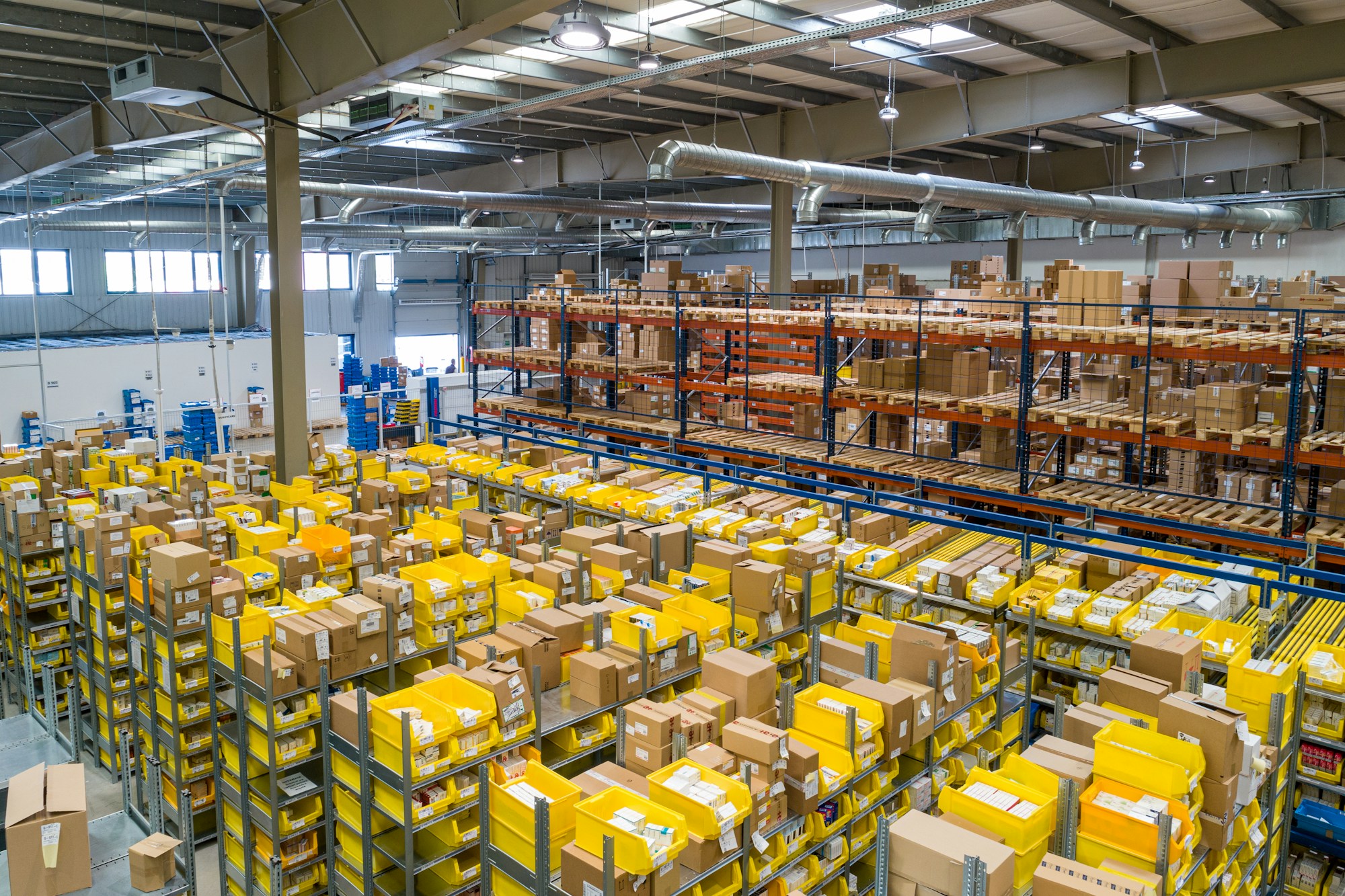
Agentic AI is also reshaping warehouse operations, where GXO Logistics has begun piloting AI-driven autonomous vehicles inside distribution centers. The pilot represents a convergence of several technology threads: autonomous navigation, real-time inventory visibility, and AI-powered task allocation. Rather than following fixed paths like traditional automated guided vehicles, these systems use AI to dynamically route themselves based on current warehouse conditions, order priorities, and labor availability.
AutoScheduler.AI, recently named a top 100 supply chain technology provider by Inbound Logistics, exemplifies the broader trend of AI moving from analytics dashboards into operational decision-making. The company's platform uses AI to optimize warehouse dock scheduling, labor allocation, and load sequencing — decisions that were previously made by experienced warehouse managers using spreadsheets and gut instinct.
What This Means for the Industry
The shift from predictive to agentic AI in logistics represents a fundamental change in how supply chains operate. When AI systems can autonomously execute decisions — rebooking a shipment with a different carrier when the original pickup is delayed, adjusting warehouse staffing in real time based on inbound volume changes, renegotiating rates based on current market conditions — the operational model changes from human-directed to human-supervised.
That transition creates enormous efficiency gains, but it also raises questions about workforce displacement, accountability when AI makes bad decisions, and the concentration of logistics intelligence in a small number of AI platform providers. For an industry that moves physical goods through a fragmented ecosystem of carriers, warehouses, and brokers, the consolidation of decision-making in AI systems could reshape power dynamics as profoundly as it reshapes cost structures.
The autonomous truck may still be coming. But agentic AI is already here — and it's changing freight from the inside out.
Want deeper analysis?
VIP members get daily briefings, implementation playbooks, and vendor scorecards.
Unlock VIP AccessSiemens MindSphere
From $499/moIndustrial IoT platform for connecting machines and optimizing operations.
Try Free →