Agile Robots Absorbs thyssenkrupp Automation Engineering in Bold AI-Manufacturing Play
Munich-based Agile Robots finalizes its acquisition of thyssenkrupp Automation Engineering, gaining 650 specialists and 75 years of production-line expertise to fuel its AI-driven robotics ambitions.
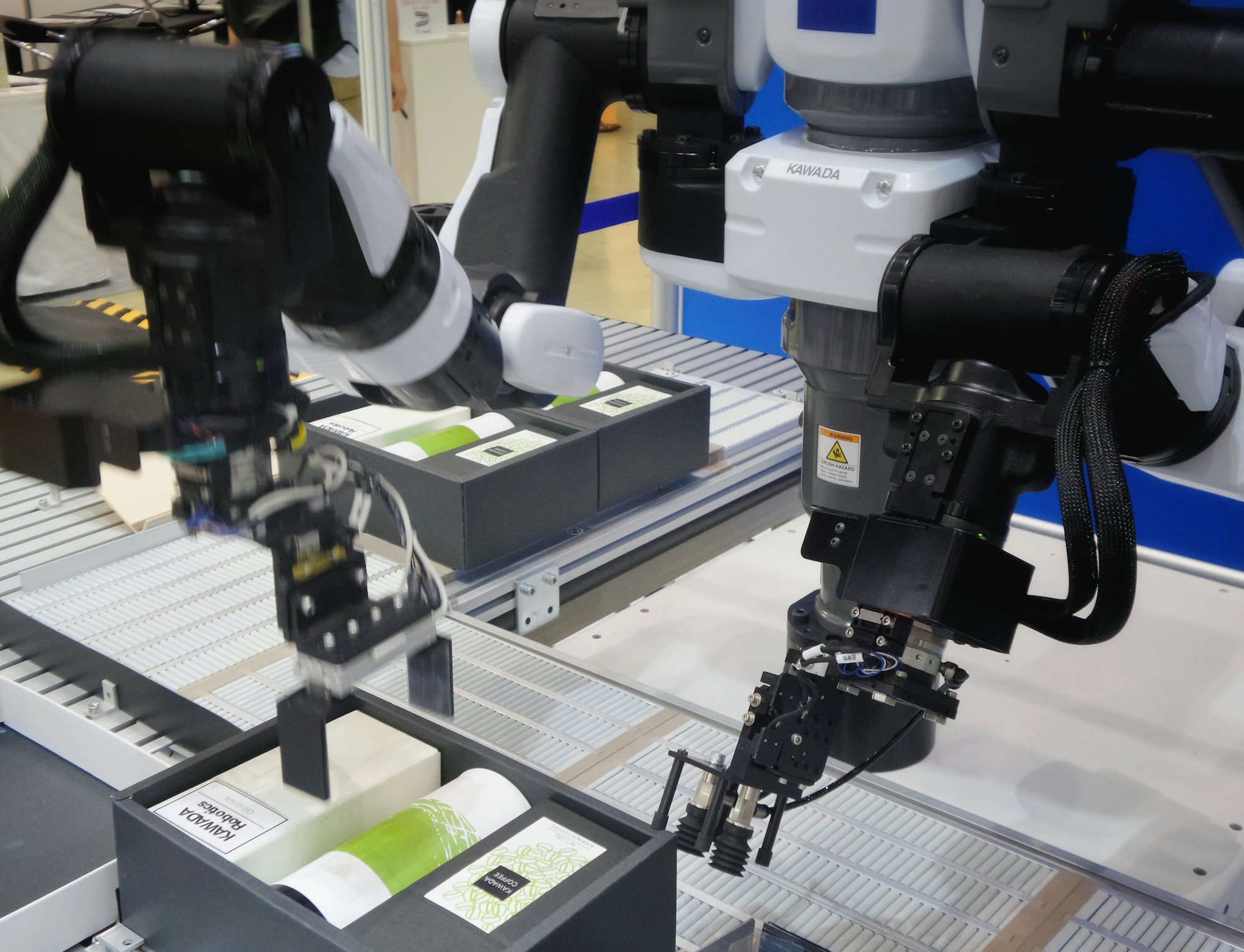
The industrial robotics landscape shifted this week as Munich-based Agile Robots closed its acquisition of thyssenkrupp Automation Engineering (tkAE), absorbing roughly 650 specialists, ten international sites, and more than seven decades of production-system know-how into its growing AI-powered automation group.
The deal, first announced in November 2025, transforms Agile Robots from an AI-native upstart into a vertically integrated player capable of designing, simulating, and deploying intelligent manufacturing cells at OEM scale. The acquired entity will continue operations under the name Krause Automation, a nod to its legacy roots, with former tkAE chief executive Dr. Rolf-Günther Nieberding staying on to lead the unit.
Why This Deal Matters for Industrial AI
On paper, the transaction looks like a classic talent-and-infrastructure land grab. But its real significance lies in the convergence it represents: the merging of classical automation engineering with modern AI-driven robotics.
Agile Robots built its reputation on dexterous robotic arms that use real-time computer vision and force-feedback control to handle tasks traditionally requiring human judgment—think bin-picking in mixed-SKU environments, or precision assembly of irregularly shaped components. What the company lacked was the large-scale systems integration muscle needed to embed those capabilities inside actual automotive, aerospace, and consumer-electronics production lines.
Krause Automation fills that gap. Its engineers have spent decades designing and commissioning turnkey production systems for blue-chip OEMs across Europe and North America. The combination gives Agile Robots an end-to-end value chain: AI perception and control at the cell level, backed by the project-management depth to roll those cells into greenfield and brownfield plants alike.
The Broader Trend: AI Robotics Companies Are Acquiring Hardware DNA
The deal mirrors a broader pattern in industrial AI. Pure-software and pure-AI companies are discovering that selling algorithms to manufacturers requires intimate knowledge of physical production constraints—cycle times, safety certifications, fixture tolerances, and the messy realities of shop-floor integration. Rather than build that expertise organically, several AI-robotics firms are opting to acquire it.
For thyssenkrupp, the divestiture is another step in its ongoing portfolio restructuring, trimming non-core units to focus capital on steel, marine systems, and materials services. The company framed the move as strategic, noting that Krause Automation would find a better growth trajectory under a robotics-focused parent.
What Comes Next
Agile Robots now commands a workforce north of 1,500 people and a presence spanning Germany, China, and North America. The company has signaled that its next priority is integrating Krause Automation's engineering teams with its own AI development labs to create what it calls "intelligence-native production systems"—lines where machine-learning models are embedded at every station, not bolted on as afterthoughts.
For manufacturers evaluating automation partners, the message is increasingly clear: the winners in next-generation industrial robotics won't be pure-play AI shops or traditional system integrators. They'll be hybrids that speak both languages fluently. With this acquisition, Agile Robots is making a credible claim to be exactly that.
Want deeper analysis?
VIP members get daily briefings, implementation playbooks, and vendor scorecards.
Unlock VIP AccessSiemens MindSphere
From $499/moIndustrial IoT platform for connecting machines and optimizing operations.
Try Free →