2026 Is the Year Autonomous Quality Inspection Finally Goes Mainstream in Manufacturing
After years of pilot programs and limited deployments, AI-powered visual inspection is scaling across discrete manufacturing — driven by better vision models, cheaper edge compute, and a quality workforce that's aging out.
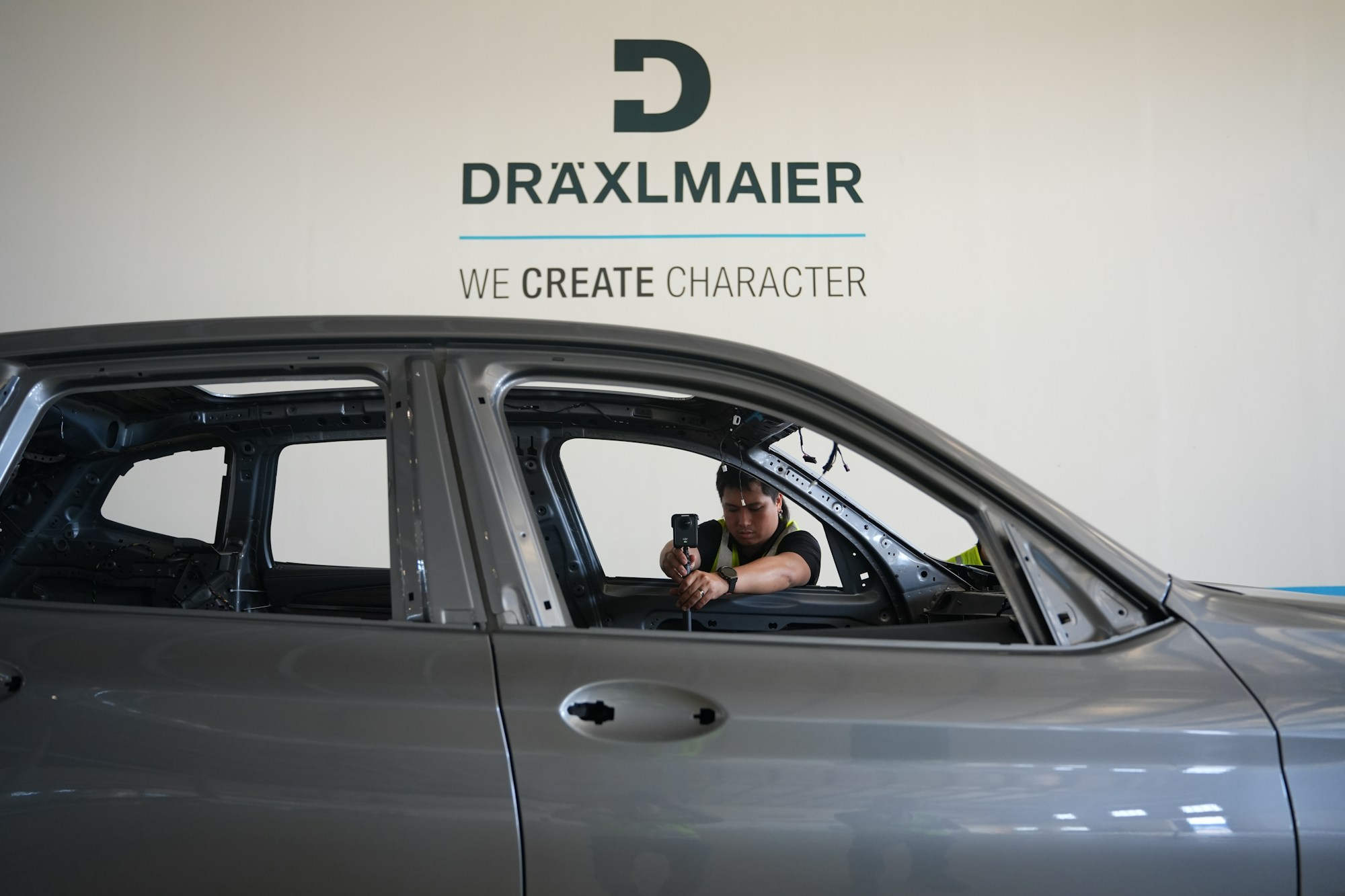
For the better part of a decade, autonomous quality inspection has been the perpetual "next big thing" in discrete manufacturing. Vendors demonstrated impressive proof-of-concept results, analysts published glowing forecasts, and manufacturers launched pilot programs — only to find that moving from a controlled demo to full production deployment was harder than anyone anticipated.
That is changing in 2026. Multiple convergent forces — dramatically improved computer vision models, commoditized edge computing hardware, and a growing shortage of experienced quality inspectors — have finally tipped the economics in favor of large-scale adoption.
The Technology Caught Up
The core technical challenge in automated visual inspection has always been variability. A scratch on a painted automotive panel looks different under every lighting condition. A micro-crack in a semiconductor wafer may be invisible from one angle and obvious from another. Traditional machine vision systems required painstaking manual programming for each defect type, each product variant, each inspection station.
The current generation of AI inspection systems takes a fundamentally different approach. Trained on large datasets of both defective and acceptable parts, these models learn to generalize across conditions rather than being hand-coded for specifics. Companies like Cognex, Keyence, and a wave of startups have shipped inspection platforms that can be deployed and retrained in days rather than months, with accuracy rates that now consistently exceed human inspectors on repetitive tasks.
Edge inference hardware has simultaneously dropped in price while gaining capability. An inspection station that required a dedicated GPU server five years ago can now run on a compact edge device costing under $2,000 — making it economically viable to deploy inspection at dozens of stations across a single plant.
The Workforce Factor
But the biggest driver isn't technological — it's demographic. Quality inspection has historically been a skilled role, relying on experienced workers with years of accumulated judgment about what constitutes an acceptable part. That workforce is aging, and younger workers are not replacing them at the same rate.
A 2026 survey from the Manufacturing Institute found that quality roles are among the hardest to fill in the sector, with 67% of manufacturers reporting difficulty finding qualified quality control personnel. The problem is acute in industries with complex visual inspection requirements — aerospace, medical devices, electronics — where a single missed defect can have safety-critical consequences.
Autonomous inspection isn't replacing quality professionals so much as making it possible for fewer of them to cover more ground. The AI handles the high-volume, repetitive screening, while human experts focus on ambiguous cases, root cause analysis, and process improvement — higher-value work that is both more engaging and more impactful.
The Integration Challenge Remains
Scaling isn't without obstacles. Manufacturers attempting enterprise-wide deployment are finding that the AI model is often the easy part. The harder work involves integrating inspection data with manufacturing execution systems, establishing feedback loops that connect detected defects to upstream process adjustments, and building the data infrastructure to retrain models as products evolve.
Companies that treat AI inspection as a standalone gadget tend to get standalone results. Those that embed it into a continuous quality improvement workflow — where inspection data feeds back into process control in near real time — are seeing rejection rates drop by 30 to 50 percent within the first year of deployment.
The Road Ahead
The shift to autonomous quality inspection is part of a broader pattern in manufacturing AI: the technology works, the business case is clear, and the constraint has moved from "can we do this?" to "can we deploy this across our operations without breaking everything else?" That's a less glamorous phase, but it's the phase where actual value gets created. For manufacturers still debating whether to invest, the window for gaining competitive advantage through early adoption is closing fast.
Want deeper analysis?
VIP members get daily briefings, implementation playbooks, and vendor scorecards.
Unlock VIP AccessSiemens MindSphere
From $499/moIndustrial IoT platform for connecting machines and optimizing operations.
Try Free →