Edge AI Is Rewriting the Rules of Predictive Maintenance — And the Factory Floor Will Never Be the Same
As predictive maintenance matures from buzzword to baseline, edge AI processors from NVIDIA, Intel, and Qualcomm are enabling real-time decision-making that was architecturally impossible just two years ago.
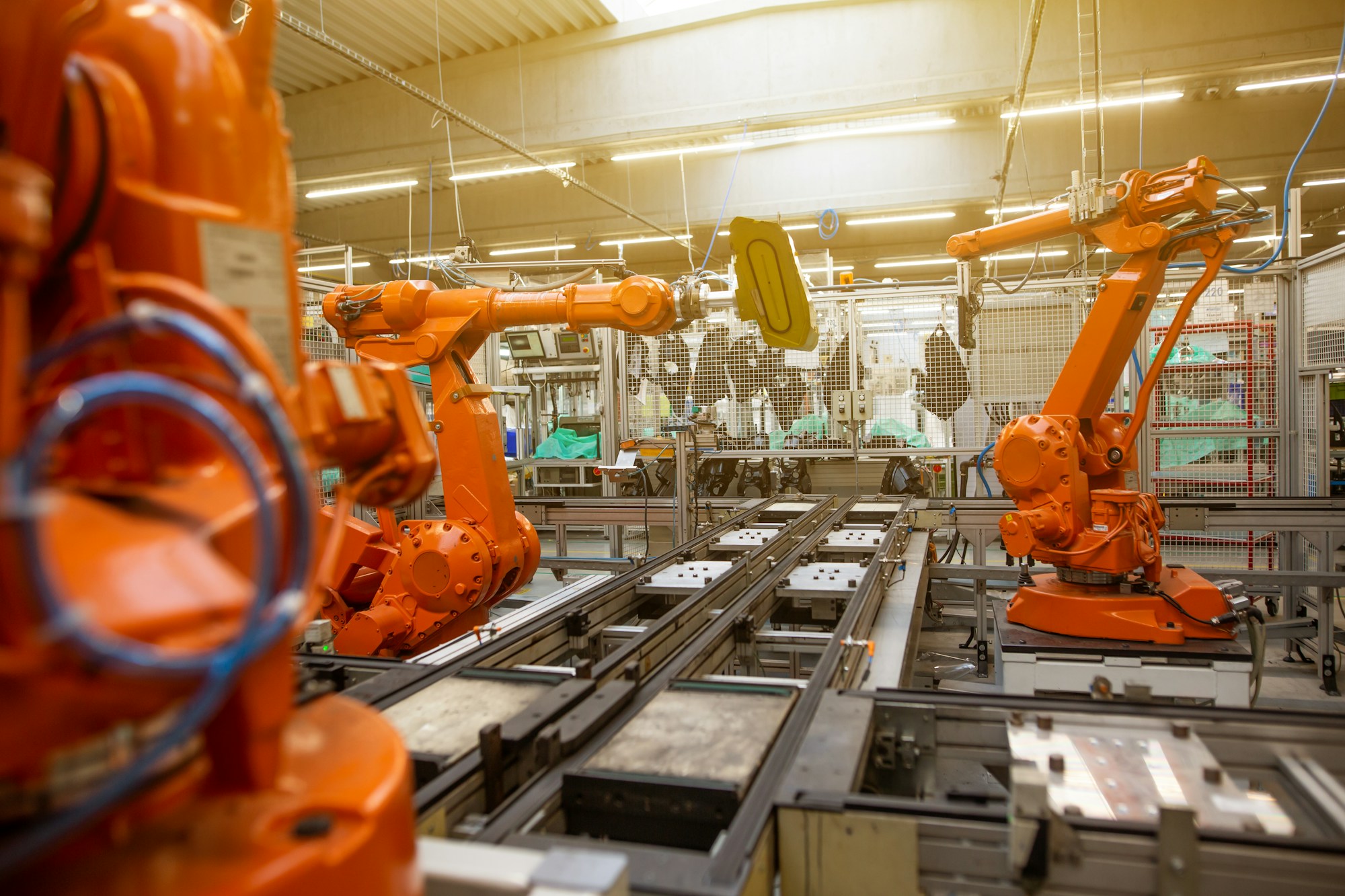
As predictive maintenance matures from buzzword to baseline, the real differentiator is where the intelligence lives. The answer, increasingly, is at the edge.
For years, predictive maintenance was the perennial "next big thing" in manufacturing — always promising, rarely delivering at scale. That era is over. In 2026, the global predictive maintenance market is projected to reach $23.5 billion, growing at a compound annual growth rate exceeding 28 percent. Adoption rates among large manufacturers have surpassed 45 percent, and cloud-based solutions are now pulling small and mid-sized enterprises into the fold. But the most consequential shift isn't about market size. It's about architecture.
Edge AI — the practice of running inference models directly on factory-floor hardware rather than routing data to distant cloud servers — is fundamentally restructuring how manufacturers detect, predict, and prevent equipment failures. And the companies leading this transition are rewriting the competitive calculus for the entire sector.
From Cloud-First to Edge-Native
The logic of edge deployment is brutally simple: when a CNC spindle is microseconds from catastrophic failure, a 200-millisecond round trip to AWS doesn't cut it. Edge AI processors from NVIDIA, Intel, and Qualcomm now deliver sub-10-millisecond inference latency directly at the machine level. NVIDIA's Jetson Orin platform, Intel's Meteor Lake industrial chips, and Qualcomm's dedicated industrial AI processors are all shipping in volume in 2026, and they're enabling a class of real-time decision-making that was architecturally impossible just two years ago.
The implications extend beyond speed. Edge processing means sensitive production data never leaves the plant floor — a critical advantage for manufacturers in defense, aerospace, and pharmaceutical sectors where data sovereignty isn't negotiable. It also slashes bandwidth costs. A single vibration sensor on a high-speed motor can generate gigabytes of raw data daily. Processing that data locally and transmitting only anomaly alerts reduces cloud infrastructure costs by orders of magnitude.
Hexagon's APOLLO: A Case Study in Convergence
In March 2026, Hexagon Manufacturing Intelligence launched APOLLO, an AI-powered predictive condition monitoring platform that exemplifies where the industry is headed. Designed for Coordinate Measuring Machines and machine tools — the precision backbone of any quality-focused production line — APOLLO analyzes machine behavior, environmental conditions, and operational data to detect anomalies and predict failures up to 90 days in advance.
What makes APOLLO notable isn't just its predictive horizon. It's the platform's interoperability. APOLLO monitors both Hexagon and third-party devices through a unified dashboard, offering fleet-wide visibility into asset health. It supports both cloud deployment for scalability and on-premises installation for facilities that require air-gapped security. In an industry plagued by vendor lock-in and siloed data, that flexibility is a genuine differentiator.
The platform also addresses a less discussed but equally urgent challenge: the skilled labor shortage. By replacing manual tracking and reactive maintenance workflows with data-driven scheduling, APOLLO allows smaller maintenance teams to manage larger equipment fleets — a practical necessity as experienced technicians retire faster than they can be replaced.
ABB, Samsung, and the Factory-Wide Intelligence Layer
Hexagon isn't operating in isolation. ABB continues to expand its RobotStudio platform, which now integrates with NVIDIA's Omniverse to let manufacturers simulate entire production processes as physics-accurate digital twins before deploying changes to physical lines. The result is a closed loop: digital twin simulations inform predictive models, which feed edge AI systems, which generate the operational data that refines the twins. Virtual commissioning alone is cutting on-site deployment time by an average of 52 percent — six to eight weeks saved per project for large-scale plants.
Samsung Electronics, meanwhile, has announced a strategy to transform all its global manufacturing into "AI-driven factories" by 2030, with specialized AI agents deployed for quality control, production scheduling, and logistics. The company is building on a foundation where more than 40 percent of manufacturers globally are already adopting AI-powered scheduling tools in 2026, a figure Gartner expects to reach 65 percent by 2030.
The common thread is convergence. Predictive maintenance is no longer a standalone function — it's becoming one node in a factory-wide intelligence layer that connects asset health, production planning, quality assurance, and supply chain logistics into a single adaptive system.
The ROI Question Is Settled
If the business case for predictive maintenance was once speculative, it is now empirical. Facilities that have invested in proper sensor coverage are reporting 40 to 50 percent reductions in unplanned downtime. AI-optimized production flows are delivering average efficiency gains of 31 percent. Global smart manufacturing adoption stands at 47 percent as of early 2026, a 12 percent increase over the previous year, and the trajectory shows no sign of plateauing.
But the more telling metric is what happens at the tail end of adoption curves. As collaborative robots — now a $11.3 billion market growing at 28 percent annually, with over 210,000 units shipped in the last four quarters — become standard fixtures on production lines, they are increasingly sharing de-identified operational data. Seam quality metrics, surface finish data, and cycle-time anomalies from one facility's cobots can train predictive models deployed at another. The result is a network effect: every new edge device makes the entire ecosystem's predictions slightly better.
What Comes Next
The next frontier is autonomy. Today's edge AI systems flag anomalies and recommend maintenance windows. Tomorrow's will autonomously reroute production, adjust machine parameters, and schedule their own repairs. The building blocks — sub-10ms edge inference, mature digital twins, fleet-wide monitoring platforms — are all in place. The remaining challenge is trust.
Manufacturers have spent decades building cultures around human-in-the-loop decision-making, and for good reason. A false positive that shuts down a production line costs real money. But as prediction accuracy improves and the cost of unplanned downtime continues to climb, the economic pressure to close the loop between prediction and action will prove irresistible.
The factories of 2030 won't just predict failures. They'll prevent them — automatically, continuously, and at the edge.
Want deeper analysis?
VIP members get daily briefings, implementation playbooks, and vendor scorecards.
Unlock VIP AccessSiemens MindSphere
From $499/moIndustrial IoT platform for connecting machines and optimizing operations.
Try Free →