FANUC Bets $90 Million on American Robot Manufacturing — And a New Robotics Academy to Staff It
FANUC America is building an 840,000 sq ft robot manufacturing facility in Michigan and opening the largest robotics training center in the U.S., signaling a decisive shift toward domestic automation production.
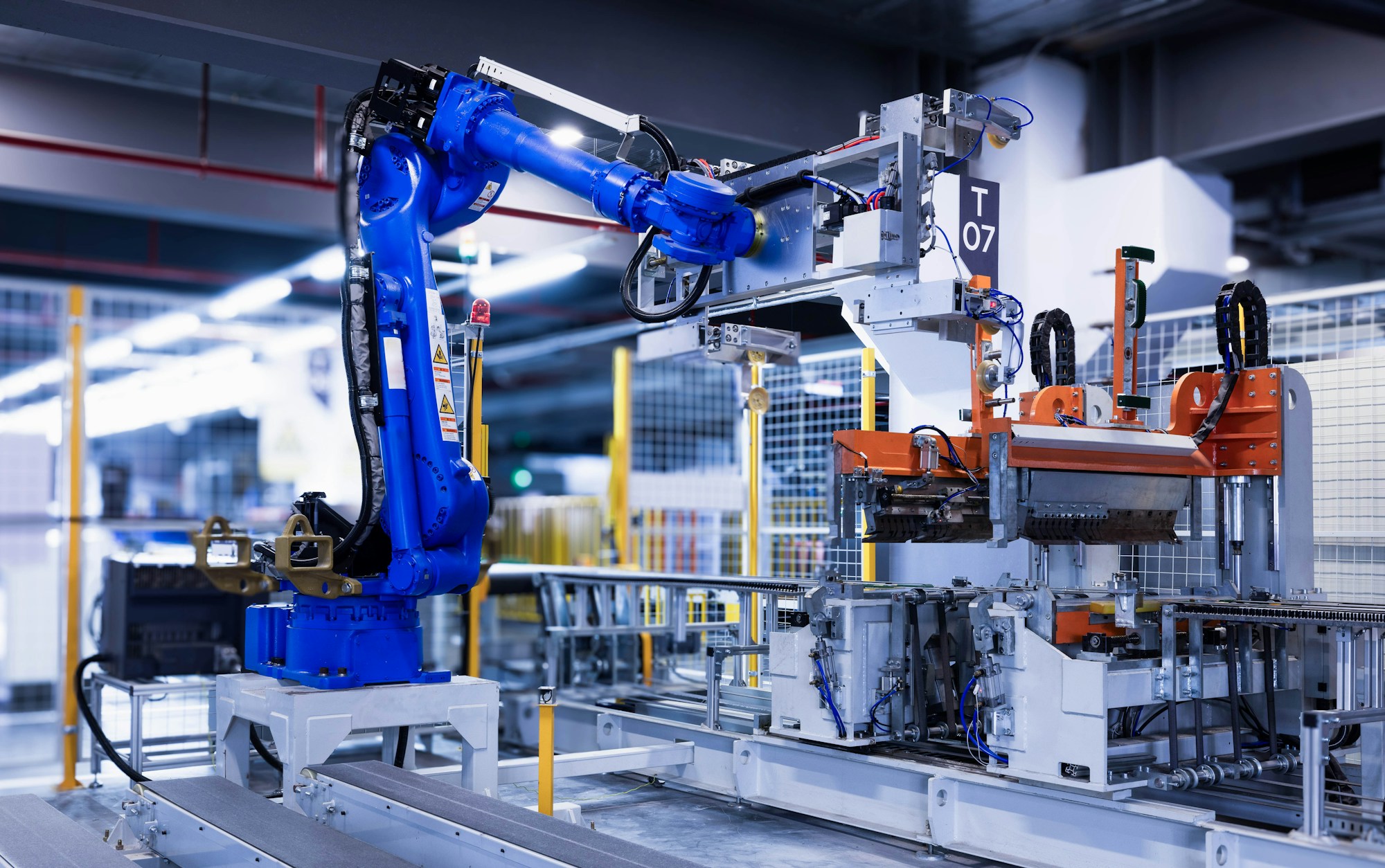
FANUC America, the North American arm of the world's largest industrial robot manufacturer, announced this week that it will invest $90 million to build a new 840,000-square-foot robot manufacturing facility in Pontiac, Michigan. The investment brings FANUC's total U.S. capital commitment since 2019 to nearly $300 million and pushes its domestic footprint to roughly 3 million square feet — a clear bet that the future of robotics manufacturing, not just robotics deployment, is increasingly American.
The facility, targeted for completion in late 2027, is expected to create 225 new jobs and will focus on expanding FANUC America's engineering capacity and advanced manufacturing capabilities to meet surging demand for automation solutions across North America.
The Demand Signal
FANUC's expansion isn't speculative. It reflects a demand environment that has shifted fundamentally over the past two years. North American robot orders hit record levels in 2025, driven by a convergence of factors: persistent labor shortages in manufacturing, reshoring initiatives that are bringing production back from Asia, and the maturation of AI-enabled robotics that can handle tasks previously considered too complex for automation.
The types of robots being ordered have shifted as well. Collaborative robots — cobots that work alongside human operators without safety caging — now account for a growing share of deployments. And increasingly, customers are asking for robots that come pre-integrated with machine vision, force sensing, and AI-based path planning, rather than the bare articulated arms that dominated orders a decade ago.
FANUC's new facility will support this shift, with expanded capabilities in physical AI, virtual commissioning, and digital-twin technologies — the tools that allow manufacturers to simulate, test, and optimize robotic workcells before a single physical component is installed.
The Academy Play
Perhaps more significant than the factory itself is what FANUC is building alongside it. The newly expanded FANUC Academy, opening later this year in Auburn Hills, Michigan, will become the largest robotics and automation skills-development center in the United States.
This addresses what has quietly become the binding constraint on automation adoption: not the cost of robots, not the capability of the technology, but the availability of people who know how to deploy, program, and maintain them. The manufacturing sector faces a well-documented skills gap, and the robotics-specific talent shortage is even more acute. Companies that have purchased automation systems frequently report that the biggest delay to getting them operational isn't delivery or installation — it's finding qualified integrators and technicians.
FANUC Academy will offer training programs covering robot programming, system integration, AI-enabled automation, and maintenance, with a curriculum designed to serve everyone from vocational students to experienced engineers looking to upskill. The company has framed it explicitly as an answer to the national manufacturing skills gap and the shift toward AI-enabled robotics.
The Reshoring Context
FANUC's decision to manufacture robots domestically — rather than simply importing them from its massive Japanese production base — reflects a broader industry calculus. Supply chain disruptions during and after the pandemic exposed the risks of depending on transpacific logistics for critical automation components. Tariff uncertainty has further strengthened the case for domestic production. And customers increasingly want shorter lead times and local technical support, which are easier to deliver from a U.S.-based manufacturing operation.
FANUC isn't alone in this calculus. Several major robotics companies have announced or expanded U.S. manufacturing operations over the past 18 months. But FANUC's investment stands out for its scale and for the integrated approach of pairing production capacity with workforce development infrastructure.
What It Means
The $90 million investment is a vote of confidence in several concurrent trends: that American manufacturing is entering a sustained automation cycle, that AI is making robots capable enough to justify deployment in applications that were previously uneconomical, and that the domestic market is large enough to warrant local production rather than import-only distribution.
For manufacturers evaluating their own automation strategies, the FANUC expansion offers a practical signal: the robotics supply chain is getting shorter, the talent pipeline is getting wider, and the window for treating automation as a someday priority is closing.
Want deeper analysis?
VIP members get daily briefings, implementation playbooks, and vendor scorecards.
Unlock VIP AccessSiemens MindSphere
From $499/moIndustrial IoT platform for connecting machines and optimizing operations.
Try Free →