Gartner Sounds the Alarm: AI's Energy Appetite Is Now a Strategic Supply Chain Risk
New Gartner research warns that surging AI power demand is straining grids and forcing supply chain leaders to treat energy availability as a strategic risk — not just an operating cost.
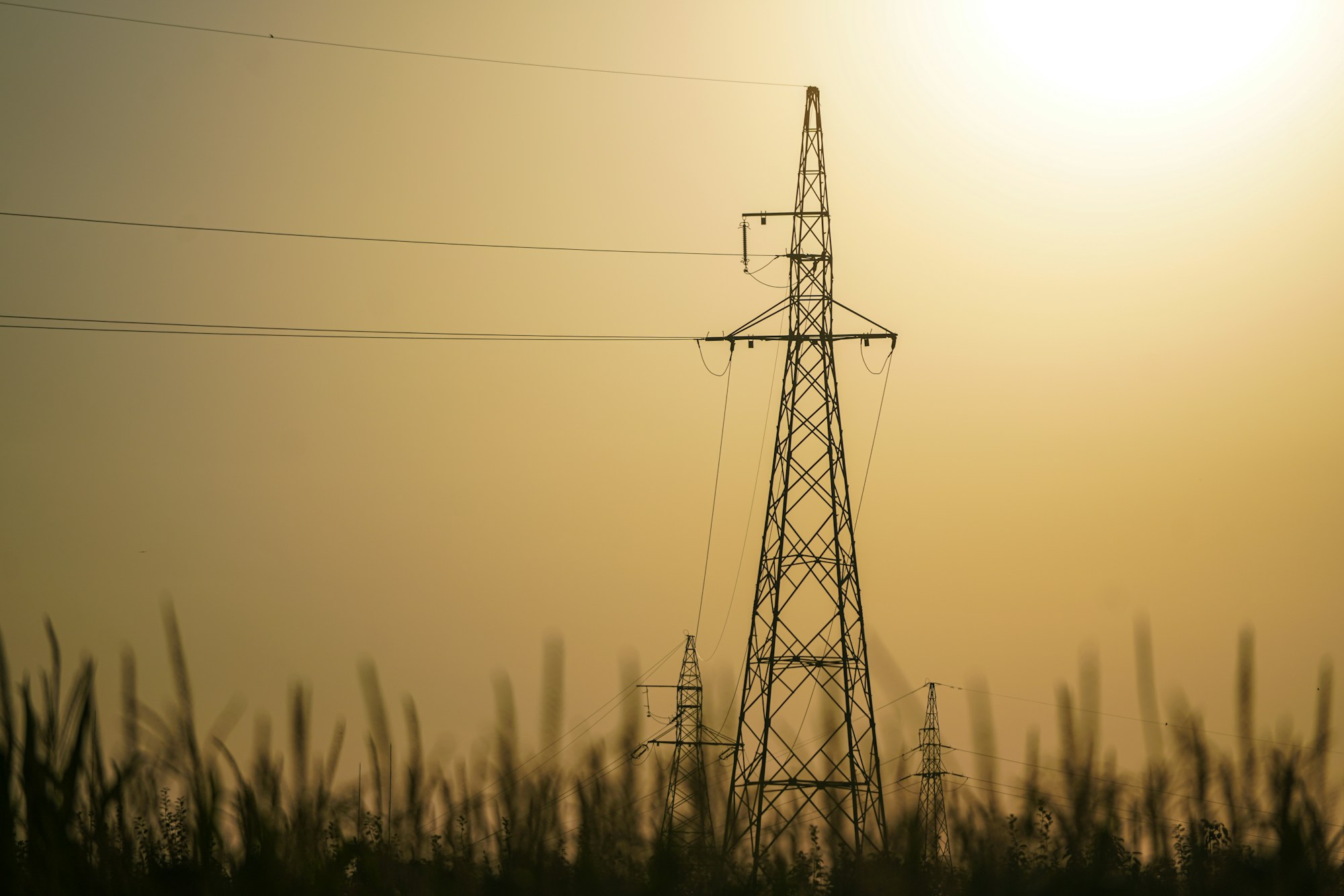
For most of the past century, electricity was the one input that supply chain leaders could safely take for granted. Power was cheap, abundant, and reliably delivered. You built your plant, you plugged it in, and you worried about other things.
That assumption is breaking down. New research from Gartner warns that the explosive growth of AI and data center workloads is straining global electricity infrastructure so severely that energy availability, pricing, and grid reliability should now be treated as strategic risk factors — on par with geopolitical disruption, raw material scarcity, and labor shortages.
The Numbers Behind the Warning
AI workloads are driving a sharp, sustained rise in electricity demand at a moment when the infrastructure to deliver that electricity is already capacity-constrained. Data centers currently account for roughly 2-3% of global electricity consumption, but that figure is growing at double-digit annual rates as AI training runs scale to tens of thousands of GPUs and inference workloads proliferate across cloud infrastructure.
The bottleneck isn't just generation capacity. It's the entire delivery chain: high-voltage transmission lines, distribution substations, transformers — particularly the large power transformers that take 12-18 months to manufacture and are already backordered globally — and the permitting and construction processes needed to connect new loads to the grid.
In practical terms, manufacturers in regions with high data center density are already experiencing longer wait times for new grid connections, higher electricity prices driven by demand competition, and reduced reliability as grids operate closer to their capacity limits. Prologis, the world's largest logistics real estate company, recently reported that supply chain leaders across its portfolio are bracing for an energy crunch that will constrain where and how they can operate.
From Background Utility to Strategic Limiter
Gartner's recommendation is blunt: supply chain organizations need to elevate energy from an operational line item to a strategic planning variable. That means incorporating grid capacity analysis into site selection decisions, stress-testing supply chain designs against energy availability scenarios, and building energy resilience through distributed generation, battery storage, and demand flexibility programs.
For industrial operators specifically, the implications extend beyond facility planning. Manufacturing processes that rely on stable, uninterrupted power — semiconductor fabrication, pharmaceutical production, food processing, data-intensive quality inspection systems — face direct operational risk from grid instability. And the AI-powered systems that many of these operations are deploying to improve efficiency are themselves adding to the power demand that's driving the constraint.
The Competition for Electrons
There's a zero-sum dimension to this challenge that makes it different from most supply chain risks. When a data center secures a 100-megawatt grid connection in a capacity-constrained region, that's 100 megawatts that aren't available for a manufacturing plant, a distribution center, or a cold storage facility. The competition isn't abstract — it's playing out in real estate markets, utility interconnection queues, and power purchase agreement negotiations across the country.
Some regions are responding by prioritizing certain types of loads over others. Virginia, which hosts the highest concentration of data centers in the world, has seen local opposition to new data center developments driven in part by concerns about grid capacity. Texas, where the grid already operates with minimal reserve margins, is grappling with how to accommodate both industrial expansion and data center growth without compromising reliability.
What Smart Operators Are Doing
The companies that are ahead of this curve are taking a multi-pronged approach. On-site generation — typically solar, sometimes combined with battery storage — reduces dependence on grid power and can provide both cost savings and resilience. Demand response programs, where industrial loads agree to curtail consumption during peak periods in exchange for reduced rates, are becoming standard practice. And some forward-thinking operators are beginning to co-locate with renewable energy assets, negotiating power purchase agreements that provide both price certainty and physical proximity to generation sources.
The Crusoe-Redwood Materials partnership that's using second-life EV batteries to power off-grid AI data centers in Nevada is one example of the kind of creative infrastructure thinking that the energy-constrained environment demands. But these solutions are still the exception, not the norm.
For the majority of industrial operators, the Gartner warning is a call to action: start treating energy as a strategic variable before the constraints force the issue. The companies that build energy resilience into their supply chain designs now will have a structural advantage over those that wait for the crisis to arrive.
Want deeper analysis?
VIP members get daily briefings, implementation playbooks, and vendor scorecards.
Unlock VIP AccessSiemens MindSphere
From $499/moIndustrial IoT platform for connecting machines and optimizing operations.
Try Free →