Hannover Messe 2026: Humanoid Robots, 6G-Connected AI, and the Physical Intelligence Era
The world's largest industrial technology fair opens April 20 in Hannover with a sharp focus on physical AI — machines that think, sense, and act in the real world.
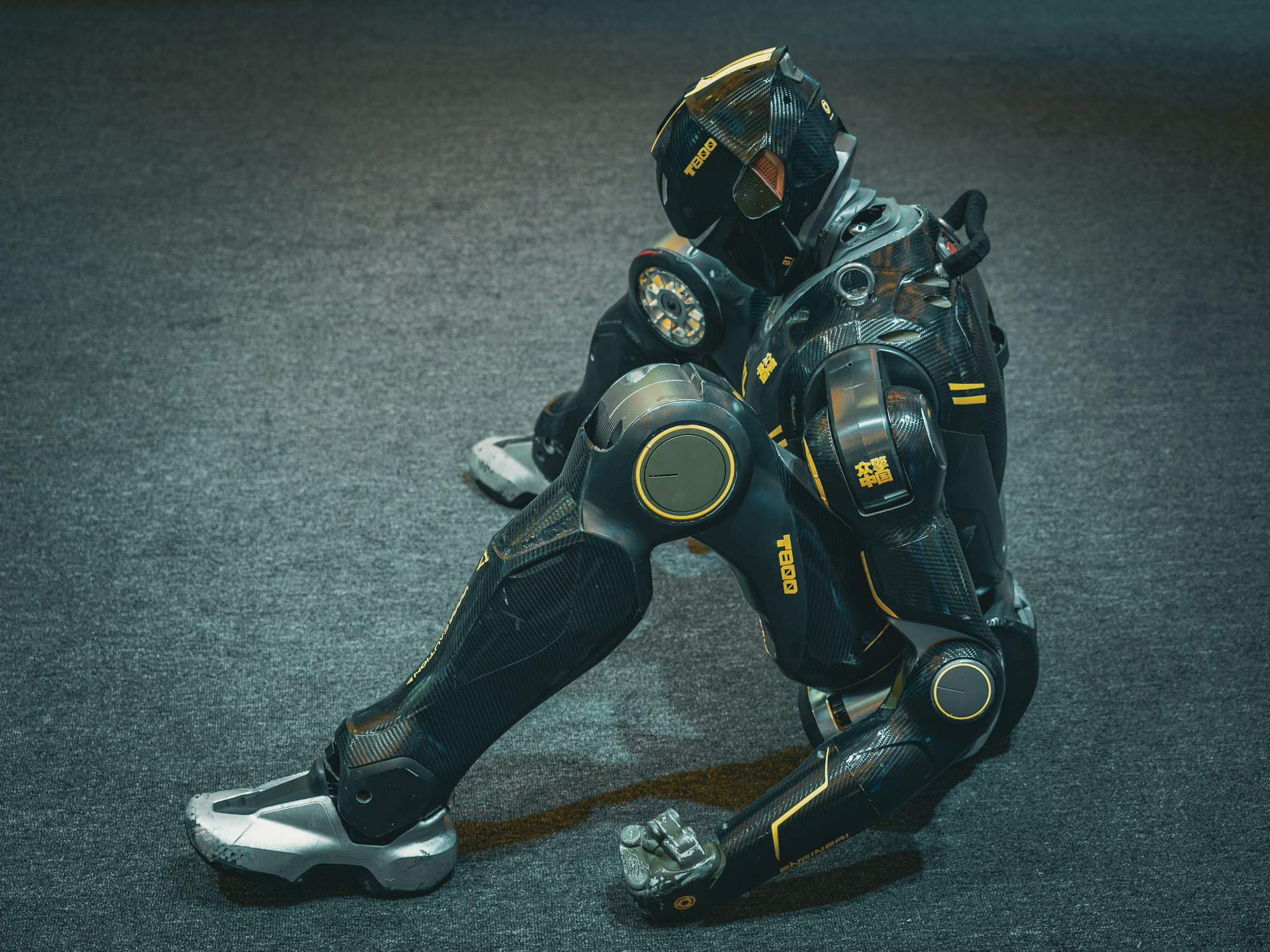
When Hannover Messe opens its doors on April 20, the usual parade of conveyor belts and control cabinets will share the spotlight with something markedly different: humanoid robots navigating factory floors, 6G-connected cobots coordinating tasks in real time, and AI systems that have finally learned to close the gap between simulation and physical reality.
The 2026 edition of the world's largest industrial technology fair is organized around three pillars — Industrial AI and Humanoid Robotics, Energy and Hydrogen, and Defense Manufacturing — with Brazil serving as the partner country. But the throughline connecting nearly every major exhibit is what the industry has taken to calling "physical AI": artificial intelligence that has left the dashboard and entered the shop floor.
The Humanoid Wave Arrives
Hexagon, the Swedish measurement technology giant, will make its humanoid debut with AEON, a robot that fuses the company's precision sensor arrays with AI-driven mission control and spatial intelligence. Unlike the theatrical humanoids that dominated trade shows in prior years, AEON is engineered for industrial utility — think metrology-grade perception married to the dexterity required for complex inspection and assembly tasks.
Agile Robots, backed by years of surgical and precision robotics R&D, will unveil its own industrial humanoid platform alongside its existing collaborative robot line. And Techman Robot plans to demonstrate an "AI Vision Flying Trigger" system — a cobot vision architecture that eliminates stop-and-scan workflows, allowing robots to process visual data while still in motion.
6G Meets the Factory
The German Research Center for Artificial Intelligence (DFKI) will present what may be the fair's most forward-looking demonstration: 6G-connected robots collaborating with human workers in a flexible manufacturing cell. The setup explores how next-generation wireless can solve one of industrial robotics' persistent headaches — the latency and bandwidth limitations that have kept most robot-to-robot coordination tethered to wired infrastructure.
If 5G brought reliable connectivity to the factory, DFKI's argument is that 6G will bring the kind of deterministic, ultra-low-latency communication that lets multiple AI-driven machines share a workspace safely and adaptively with humans — without cages, without pre-programmed paths.
The Sim-to-Real Gap Closes
Underpinning much of this year's physical AI narrative is a quiet but consequential technical milestone. Earlier in March, ABB and NVIDIA announced they had effectively closed the simulation-to-reality gap in industrial robotics — the long-standing problem where robots trained in virtual environments failed to perform reliably in the unpredictable real world. The breakthrough leans on NVIDIA's Omniverse platform and improved physics simulation, combined with ABB's decades of application-specific robotics data.
That development puts teeth into what might otherwise be trade-show hype. If simulated training transfers cleanly to physical deployment, the cost and timeline for programming new robot behaviors drops dramatically — turning humanoid and cobot deployments from multi-year integration projects into something closer to software rollouts.
What to Watch
DMG Mori, Bosch Connected Industry, Siemens, and EOS are among the heavyweights with major booth presences this year. EOS is hosting a dedicated panel on "Building Blocks for Adaptive Manufacturing" that ties together additive manufacturing, industrial AI, and robotics — a combination that points toward factories that can reconfigure production on the fly.
Hannover Messe has always been the bellwether for where industrial technology is actually headed, as opposed to where venture capital wishes it were. This year, the message is clear: the machines are getting smarter, more autonomous, and more physically capable. The question for manufacturers is no longer whether physical AI will arrive, but whether their operations are ready to absorb it.
Want deeper analysis?
VIP members get daily briefings, implementation playbooks, and vendor scorecards.
Unlock VIP AccessSiemens MindSphere
From $499/moIndustrial IoT platform for connecting machines and optimizing operations.
Try Free →