Samsung Bets Everything on AI-Driven Factories by 2030: Inside the Strategy
Samsung Electronics has laid out an ambitious plan to convert all manufacturing operations to AI-driven factories by 2030, deploying digital twins, AI agents, and end-to-end automation across its global footprint.
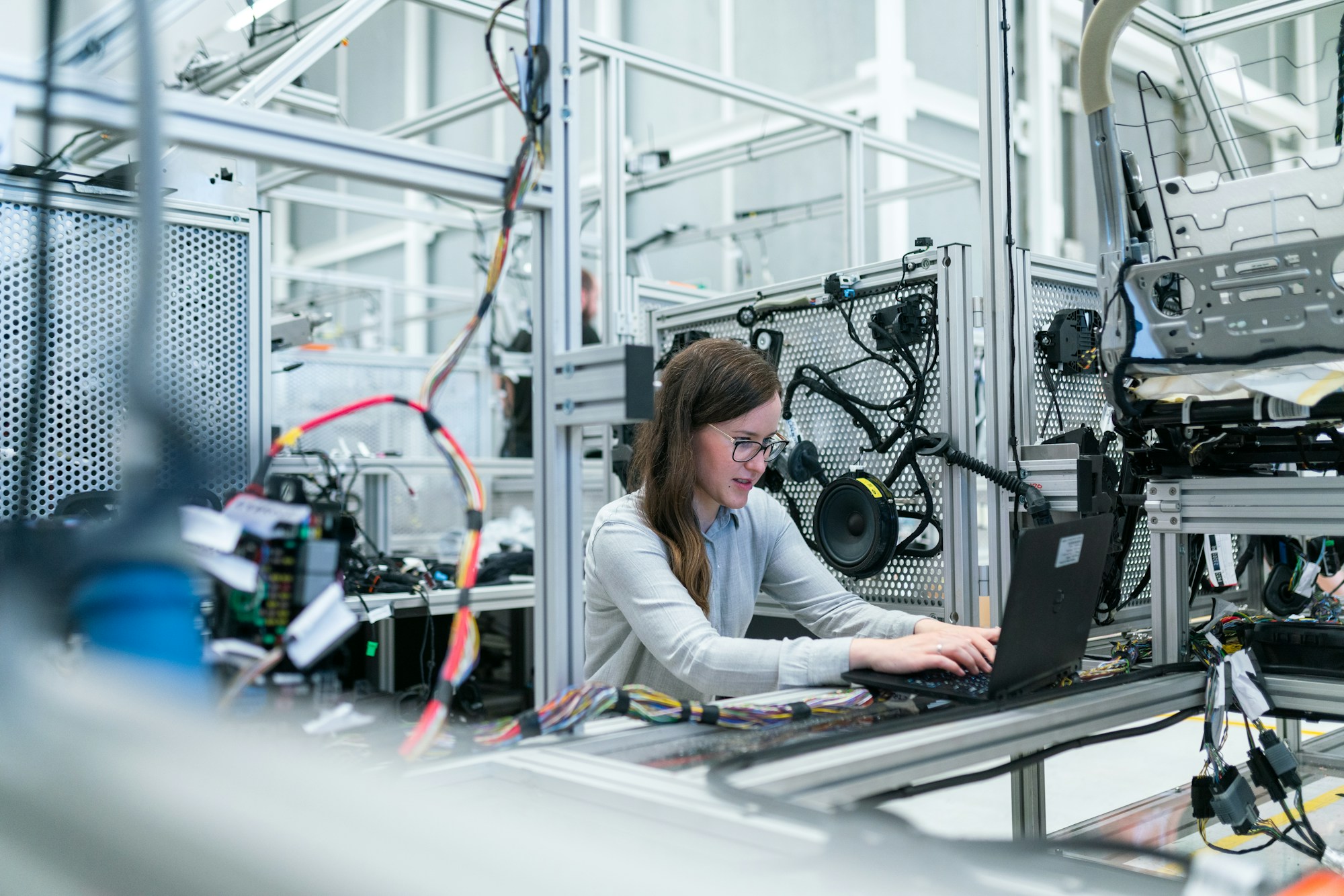
Samsung Electronics isn't dabbling with factory AI. The company has announced a top-down strategy to transition every single manufacturing operation into what it calls an AI-Driven Factory by 2030. That's not a pilot program or an innovation lab initiative — it's a company-wide transformation covering inbound logistics, production, quality inspection, and final shipment.
The announcement, made ahead of MWC 2026 in Barcelona, details a strategy built on three pillars: digital twin simulations deployed throughout manufacturing processes, specialized AI agents dedicated to quality control and production optimization, and end-to-end data integration across the entire value chain.
Digital Twins as the Foundation
Samsung is betting heavily on digital twin technology as the backbone of its factory transformation. The plan calls for simulation-based process design across all manufacturing lines, allowing engineers to test and optimize production flows virtually before committing to physical changes. This isn't a new concept, but Samsung's scale makes the commitment notable — the company operates semiconductor fabs, display manufacturing lines, appliance assembly plants, and mobile device factories across multiple continents.
The digital twin approach is designed to compress the iteration cycle. Instead of running physical trials on production equipment — which means downtime, scrap, and risk — Samsung wants to validate changes in simulation first. When you're running billion-dollar fab operations, even a 1% improvement in first-pass yield from better simulation pays for itself many times over.
AI Agents on the Floor
The most interesting element of the strategy is the deployment of specialized AI agents. Samsung is building purpose-built agents for quality control, production scheduling, and logistics coordination. These aren't general-purpose chatbots repurposed for manufacturing — they're domain-specific systems trained on Samsung's proprietary process data.
Quality control agents will handle real-time defect detection and classification. Production agents will optimize scheduling and resource allocation. Logistics agents will coordinate material flow from receiving dock to finished goods. The vision is a factory where AI handles the routine decision-making layer, freeing human operators to focus on exception handling and continuous improvement.
The Execution Challenge
Samsung's track record with large-scale technology deployment gives this announcement more credibility than the average corporate AI roadmap. But 2030 is not far away, and converting legacy manufacturing infrastructure to AI-driven operations is enormously complex. The company will need to standardize data formats across dozens of factory types, retrofit sensor systems on older equipment, and train a workforce that's accustomed to traditional manufacturing methods.
Still, if Samsung pulls this off at scale, it sets a benchmark that every major manufacturer will have to respond to. The AI-driven factory isn't a futuristic concept anymore — it's a competitive requirement.
Want deeper analysis?
VIP members get daily briefings, implementation playbooks, and vendor scorecards.
Unlock VIP AccessSiemens MindSphere
From $499/moIndustrial IoT platform for connecting machines and optimizing operations.
Try Free →